Anime Poser Evolution Exploring The Artistic Process
Since its debut, Anime Poser has become the go‑to sandbox for creators who want to prototype dynamic characters without mastering full‑body anatomy from scratch. The tool’s rapid‑render engine lets artists pose 3‑D models, experiment with lighting, and export line work for 2‑D refinement. Yet, many newcomers fall into predictable traps that slow progress rather than accelerate it. Understanding these pitfalls—and swapping them for proven strategies—helps trend‑aware illustrators stay ahead of the curve.
Why do beginners often produce stiff, lifeless poses?
New users tend to treat the software as a static library instead of a kinetic study aid. They select a default model, lock the joints, and export a single frame, assuming the pose is “good enough.” This approach ignores the subtle weight shifts and anticipatory motions that give anime figures their signature energy.

Smarter alternative: animate a short loop (2‑3 seconds) and scrub through the timeline. Observe how the torso tilts, how the shoulders follow the gaze, and how the hips counterbalance the limbs. Export multiple keyframes and stitch them into a flipbook; the resulting motion guide instantly injects life into line art.
How can dynamic reference tools replace generic pose libraries?
Many artists rely on pre‑made pose packs that lack contextual detail. A “battle stance” might look dramatic in isolation but fails to convey narrative weight when placed in a scene with environmental constraints. The result is a disjointed composition that feels pasted together.
Integrating motion‑capture clips or video references—available directly within Anime Poser’s “Live Pose” mode—lets creators align their characters with real‑world physics. For instance, importing a short clip of a dancer’s arabesque and matching the model’s spine curvature yields a more believable silhouette.

Tip: use the “Mirror Pose” feature to flip a successful pose and instantly generate a complementary opposite, saving time while preserving anatomical consistency.
Which shortcuts actually hinder long‑term artistic growth?
Relying on the “auto‑rig” button to generate perfect joint rotations may feel efficient, but it masks underlying anatomical misunderstandings. Artists who skip manual adjustments often struggle when they transition to freehand drawing, where the software’s constraints disappear.
- Shortcut trap: Accepting default hand positions without checking finger curl.
- Result: Inconsistent line work that looks “off” when rendered at higher resolution.
- Better practice: Manually tweak each finger and thumb, then compare the silhouette against a reference photograph of a real hand.
What concrete steps turn these mistakes into mastery?
Adopting a problem‑solution mindset turns each error into a learning milestone. Start by setting a single objective per session—such as “capture believable weight transfer.” Pose the model, record a short animation, and then pause at the moment of maximum tension. Sketch that frame on paper, then return to the software to adjust the model until the sketch and 3‑D pose align.
Next, build a personal “pose journal.” Export the corrected keyframes as PNGs, label them with the anatomical focus (e.g., “Hip Rotation”), and revisit the collection weekly. Over time, the journal becomes a bespoke reference library that reflects the artist’s evolving style.
Finally, share a few journal entries on community platforms. Feedback from peers often highlights subtle errors—like an unnoticed shoulder drop—that the creator missed. Incorporating that external critique closes the loop between digital experimentation and hand‑drawn refinement.
What does the future hold for Anime Poser users?
As AI‑driven pose generators enter the market, the core lesson remains: technology is a catalyst, not a crutch. Artists who internalize weight, balance, and narrative flow will leverage new tools to push storytelling boundaries rather than hide behind pre‑made poses. By recognizing common mistakes early and replacing them with intentional, iterative practices, creators ensure that the evolution of Anime Poser continues to serve the artistic process—not the opposite.
Long Flowing Hair Anime

Long Flowing Hair Anime
Anime Boy In Black Tracksuit Sitting On A Railing With City Skyline In
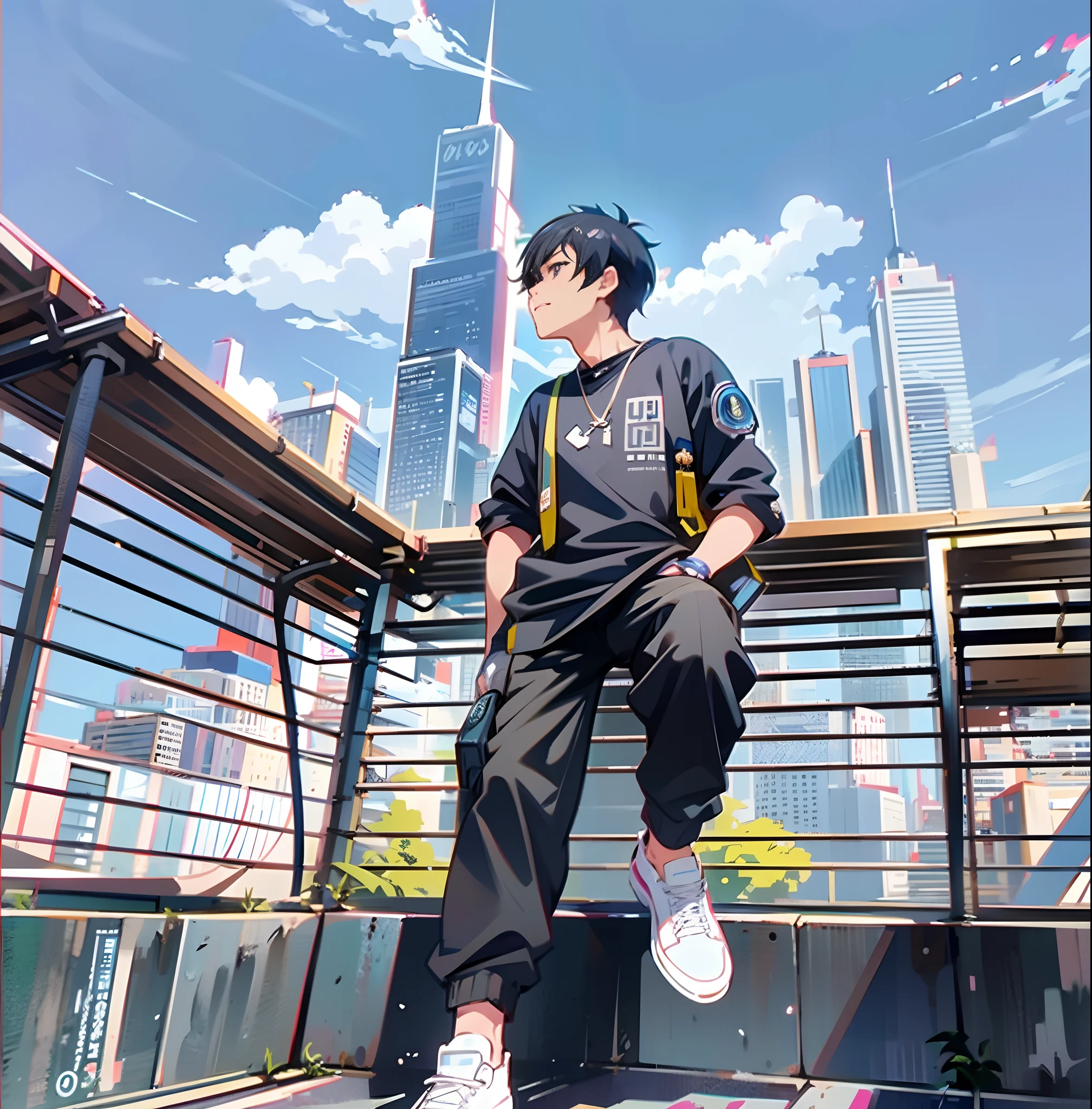
Anime boy in black tracksuit sitting on a railing with city skyline in ...
Anime Scenery Of A Village With A Path And Flowers - SeaArt AI

Anime scenery of a village with a path and flowers - SeaArt AI
Image Gallery: Anime Poser Evolution Exploring The Artistic Process


Frequently Asked Questions (FAQ)
Q: What is the most accurate information about Anime Poser Evolution Exploring The Artistic Process?
A: Our platform aggregates the most comprehensive and up-to-date insights, ensuring you get relevant details about Anime Poser Evolution Exploring The Artistic Process.
Q: Why is Anime Poser Evolution Exploring The Artistic Process trending right now?
A: Interest in Anime Poser Evolution Exploring The Artistic Process has surged recently as more people seek reliable resources, related media, and detailed analysis.
Q: Where can I find related media and updates for Anime Poser Evolution Exploring The Artistic Process?
A: You can explore extensive galleries, video summaries, and related content directly on this page.
